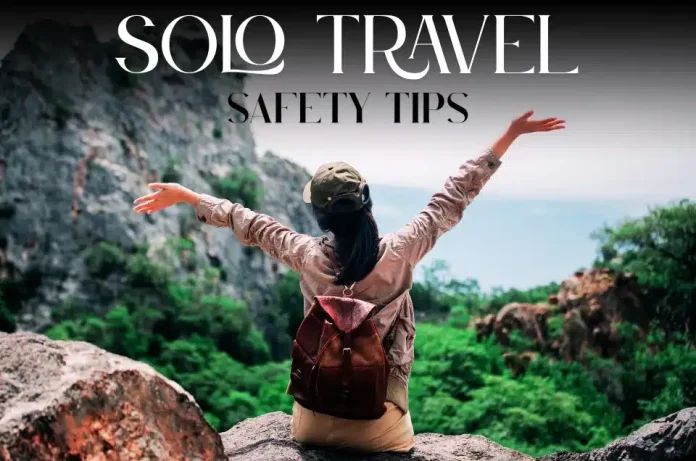
Let’s start with the truth that most solo female travel guides are afraid to say out loud: the world is, by a significant margin, safer for solo women travelers than the anxiety industry wants you to believe. That’s not naivety — it’s a statistical and experiential reality consistently reported by the tens of millions of women who travel alone every year. The gap between perceived risk and actual risk is one of the biggest obstacles between women and the solo travel that would change their lives.
That said, there are real considerations. There are places where being a solo woman changes the calculus. There are situations that require different navigation than a solo man might use. And there are habits and choices that meaningfully reduce risk without meaningfully reducing experience. This guide focuses on those — the things that actually matter, from women who’ve actually done it.
Research Your Destination Through a Female Lens
General travel safety research is useful. Female-specific research is essential. The safety profile for women in a destination can be completely different from the overall safety reputation of that destination. Japan scores very high for general safety and also consistently tops lists for solo female travelers due to low harassment rates and excellent public infrastructure. Some destinations with similarly high general safety ratings have much higher rates of street harassment. Look specifically for accounts from solo women who’ve recently visited — travel forums, subreddits like r/solotravel, and female-focused travel blogs give you a real read that general guidebooks don’t.
Choose Your Accommodation Intentionally
Accommodation is the foundation of safe solo female travel — not because you’ll spend all your time there, but because a good base affects every decision you make. Stay in well-reviewed properties in neighborhoods that are safe to walk home at night. For budget travel, female-only dorm rooms in reputable hostels offer security, community, and the practical benefit of being surrounded by other solo female travelers. For any accommodation, check that there’s a proper reception or security presence, that your room has a functioning lock, and that the property’s reviews specifically mention female guests feeling comfortable. A slightly higher accommodation budget often buys a disproportionate increase in safety and peace of mind.
Trust Your Instincts — Ahead of Politeness
This is the most consistently cited advice from experienced solo female travelers, and it’s worth stating plainly: your comfort and safety take precedence over not appearing rude. If someone’s attention makes you uneasy before you can articulate why, that discomfort is data. You don’t owe anyone an explanation for cutting a conversation short, changing seats, declining an offer, or leaving a situation that feels off. The social conditioning that makes women minimize their discomfort to avoid seeming unkind is the single biggest safety vulnerability that solo female travelers carry — and it’s one they can consciously choose to override.
Dress Codes: The Practical Reality
There are two unhelpful extremes in advice about dressing while traveling solo as a woman. The first: dress however you want, it’s your body, full stop. The second: dress conservatively everywhere to avoid attention. The practical reality sits between them. In conservative countries and religious sites, dressing modestly is both respectful of local culture and genuinely reduces unwanted attention in a way that makes the travel experience more comfortable. In other contexts, it matters far less than the anxious pre-travel reading suggests. Research the specific dress norms for where you’re going, pack a lightweight scarf that works as a cover-up when useful, and make context-specific decisions rather than applying a universal rule in either direction.
Transportation Safety: The Key Decisions
Use app-based rideshares (Uber, Grab, Bolt, or local equivalents) over unmarked taxis wherever available — the digital record of your journey, the driver’s name and photo, and the route tracking significantly increase safety and accountability. Share your ride details with someone before you get in. Sit in the back seat. If something feels wrong when you get in, it’s okay to get out immediately before the ride starts. For overnight trains or buses, book women-only compartments or carriages where they exist (Southeast Asia, India, and Japan all offer these). When traveling by public transit at night, stay in well-lit carriages near other passengers rather than isolated sections of the vehicle.
Managing Unwanted Attention Without Escalating
Unwanted attention — from persistent vendors to men who won’t take a polite no for an answer — is more common than physical danger for solo female travelers in most destinations, and handling it well makes the difference between a frustrating trip and a fluid one. Strategies that work: be confident and direct rather than apologetic (uncertainty invites persistence), invent a nearby husband or travel companion if a persistent stranger asks where you’re staying, keep headphones in even when not listening to music as a signal of unavailability, and have a practiced ‘firm no’ ready that doesn’t require explanation. You’re not responsible for managing anyone’s feelings about your boundary.
Digital Safety While Traveling Solo
Your digital security matters as much as your physical security. Use a VPN on public WiFi, especially in accommodation and cafés. Keep your location sharing on with one or two trusted people at home — not broadcast publicly. Be thoughtful about how much of your real-time location you share on social media while traveling alone; posting that you’re currently solo in a specific location provides information you may not want universally known. Keep your phone charged and carry a portable charger as a non-negotiable item. Know the emergency number for every country you visit, and save the address of your nearest embassy or consulate.
The Best Destinations for Solo Female Travel Right Now
Japan consistently tops every list and deserves its reputation — extraordinarily low crime rates, respectful culture, exceptional public transit, and a cultural value of helping others that extends warmly to confused foreign visitors. New Zealand and Iceland sit alongside Japan for safety and ease, with the addition of extraordinary natural landscapes that suit independent exploration. Portugal is outstanding — genuinely safe, walkable, English widely spoken, warm toward visitors, and currently offering excellent value. Taiwan is significantly underrated for solo female travel: extremely safe, fascinating food culture, easy to navigate, and less crowded than comparable East Asian destinations. Colombia has improved dramatically in recent years, with Cartagena, Medellín, and Bogotá all offering rich experiences to solo women who take standard urban precautions.
What Solo Female Travel Actually Gives You
The safety preparations above are real and worth taking seriously. But it’s worth ending on what the women who travel solo report back: the freedom is unlike anything else available to them. The complete ownership of your time, your route, your decisions. The confidence that accumulates with each independent navigation. The friendships that form quickly and deeply when you’re traveling alone and open. The version of yourself you meet when all the usual social roles and expectations are temporarily suspended and you’re just a person in an unfamiliar place, figuring it out. That’s what’s on the other side of the safety planning. It’s worth the planning.
